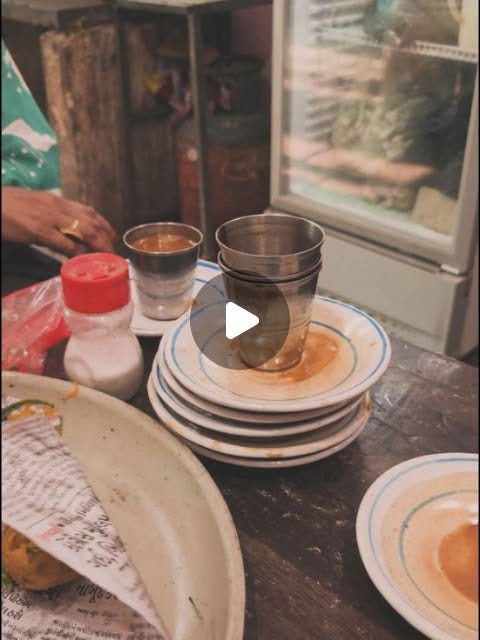
Chai
some tea related content

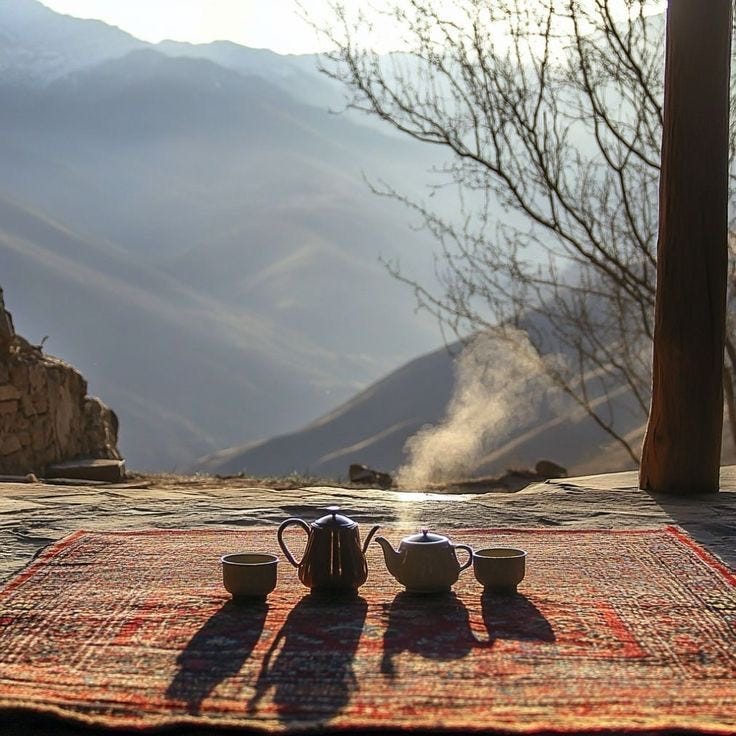
I was invited by my friend Raoul to write about the cultural history and significance of chai. I loved diving into the history and this post below featuring Raoul’s beautiful images and videos from his time in Rajasthan and my writing is a product of our shared efforts.
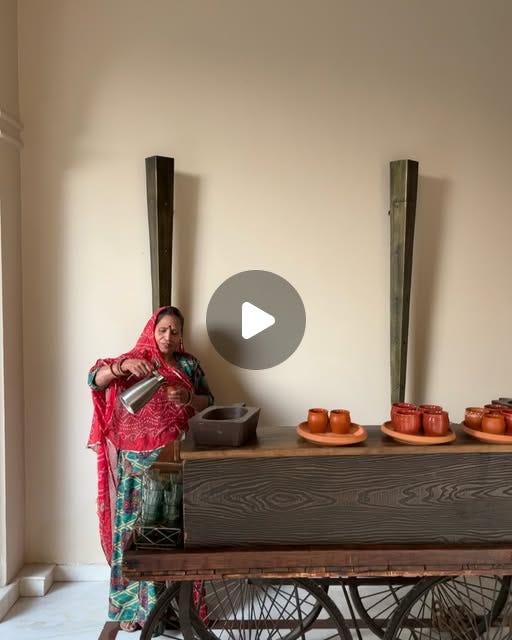
This inspired me to share some great tea related content I’ve consumed lately.
Aylar from The Table Theory, wrote about the traditions of choy and the designs of teapots in her latest Substack. I could quote the entire post but below are some quotes which spoke to my heart.
She writes on tea drinking traditions in Central Asia :
In Central Asia, tea is communal by design. Brewed in a large teapot, poured into pialas - small, handle-less, bowl-shaped cups that might look unfinished to an unfamiliar eye. But the piala is clever - without a handle, you can only hold it comfortably once it’s reached the right temperature. The object teaches you patience and urges you to stay awhile.
You can tell a lot about people by how their tea rituals are designed. In Central Asia, the teapot is made to be shared - the small cup ensuring every sip stays hot as conversation stretches on. In England, the large mug suggests the opposite - this my time, all to myself.
And on the teapot:
Central to all tea ceremonies is the humble teapot. The teapot holds a strange kind of power. It is one of the most designed objects in the world - iterated across centuries and cultures, solved and re-solved, and yet we keep returning to it. There is always, apparently, more to say.
…most of us are drinking from mugs we didn’t choose, pouring from kettles we bought for their price. Which is fine, but consider this - what if it wasn’t the only option? Not in a maximalist, buy-everything way. But in the sense of: what if one object in your daily ritual was chosen with the same care that Sakiyama brings to a teapot? What if the thing your hands reach for every morning was something that made you pause, even briefly, and feel?
Another detail of note in Aylar’s post is in passing. She mentions the vessel in which to drink the tea from- “pialas - small, handle-less, bowl-shaped cups that might look unfinished to an unfamiliar eye.” This vessel without a handle is something I’m familiar with in the farming tribal life of my own family, we also drink our morning chai from a piyala in Pakistan. An object that invites you to be still while it reaches the prefect temperature before consumption (usually alongside a paratha and egg or leftovers from the night before but usually fresh yogurt made daily). I’m always struck by the similarities between South Asia and other regions of Asia (or the world for that matter). Proving that borders and nations are truly arbitrary in the length of human history.
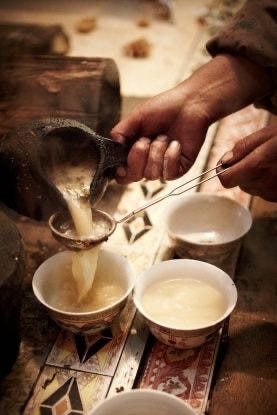
As is the handless clay pot, a matka, used in other parts of Pakistan, designed to keep the flavour and temperature optimal. And let’s not forget the glass from which most of South Asia’s chai-wallas deliver their daily doses to hundreds of millions of chai addicts.
It’s this addiction that is the subject of commentary in Shandy Lewis’s fiction, On the Greenwich line. It’s an astute yet cleverly funny insight into the very British business of tea enterprising and imperial strategising.
The British are sharp as a tack. They can sell anything. They sold opium to the Chinese, then bought tea, took it to India and sold that to the Indians (and more opium, of course). Tea became British, as did most things. They say they are a nation of shopkeepers, which is not only true but reveals the virtues of both self-deprecation and self-reliance that any good trader must possess. Naturally the British stopped dealing hard drugs once they’d got the world hooked on tea, and on this point my Aunt Hilana was quite right. When her village neighbours made fun of her for so keenly following British politics - Fancy yourself English, do you?’ - she’d simply raise the cup of black tea that never left her hand and reply, ‘Don’t we all? Then she’d point a threatening finger at the tea leaves, and that was enough for them to understand what she meant and bow their heads. Auntie Hilana always used to say that the secret to British success wasn’t so much that they’d turned a good profit on tea, but that they taught the world how to enjoy a nice cup of tea and even went to war for the sake of it. A nice cup of tea is an idea, and ideas are the most lucrative business of all.
We have embraced tea as our own in South Asia with a passion. Carrying it wherever we scatter on this planet. However, it’s always in our homelands where we return to wax lyrics of the beautiful rituals of daily cups of chai. Over the winter break two of my friends (or more accurately my tea muses)- Punam in India and Abeera in Pakistan, kept my longing topped up with their daily cups on the road, in the libraries, in gardens and in art galleries, providing endless pleasure through their Instagram stories.